Why Does My Painful Corn Keep Coming Back? The Hidden Link Between Corns and Hammertoes
Karen’s Story: From Painful Shoe Pressure to Comfortable Walking
If you’ve tried corn pads, wider shoes, cushions, creams or even had a painful corn removed only to have the discomfort return, there may be something else worth looking for.
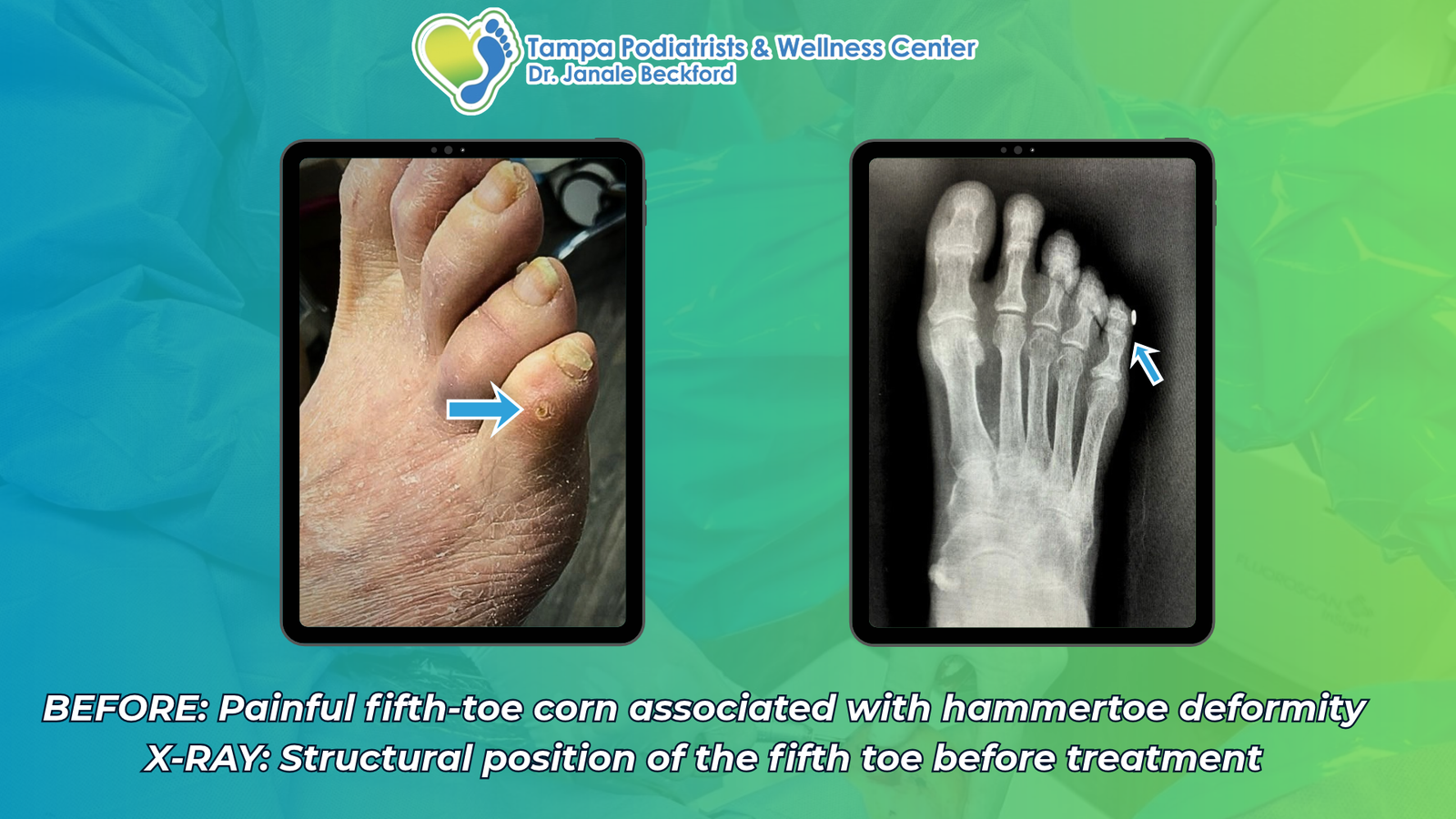
Sometimes the corn isn’t the problem. It’s the clue.Karen came to our office because of a painful corn on the outside of her right fifth toe. Walking was uncomfortable, and her shoes repeatedly rubbed against the area.
She had already tried many of the things people naturally try first: wider footwear, padding, corn cushions, and other conservative measures. But the pressure and the pain kept coming back.
Why did the Corn Keep Coming Back?
A corn develops when an area of skin is exposed to repeated pressure and friction
Removing the thickened skin can provide relied. But if the toe continues pressing against the show in the same location, the source of that pressure hasn’t changed.
When we examined Karen’s foot we found an important clue beneath the surface; a fifth-toe hammertoe deformity that was creating continued pressure at the site of the painful corn.
When a toe bends or rotates out of its normal position, part of the bone may repeatedly rub against the inside of the shoe. The skin protects itself by becoming thicker, which is how a painful corn can develop. Removing the corn may temporarily relieve the pain, but if the pressure remains, the corn may return.
That changed the conversation.
Instead of simply asking: “How do we remove this corn?”
We needed to ask: “Why is this corn developing here in the first place?”
Conservative Care Comes First
Not every painful corn or hammertoe needs surgery.
Karen initially received conservative treatment, including debridement of the corn, urea cream and footwear modification. Other conservative options were also discussed.
These approaches can help manage the painful skin and reduce external pressure.
But Karen’s symptoms persisted because the underlying deformity continued creating pressure on the toe.
At that point, we discussed whether addressing the structure responsible for that pressure was an appropriate next step.
When Minimally Invasive Surgery Became an Option
After discussing her treatment options, Karen decided to proceed with minimally invasive surgical correction.
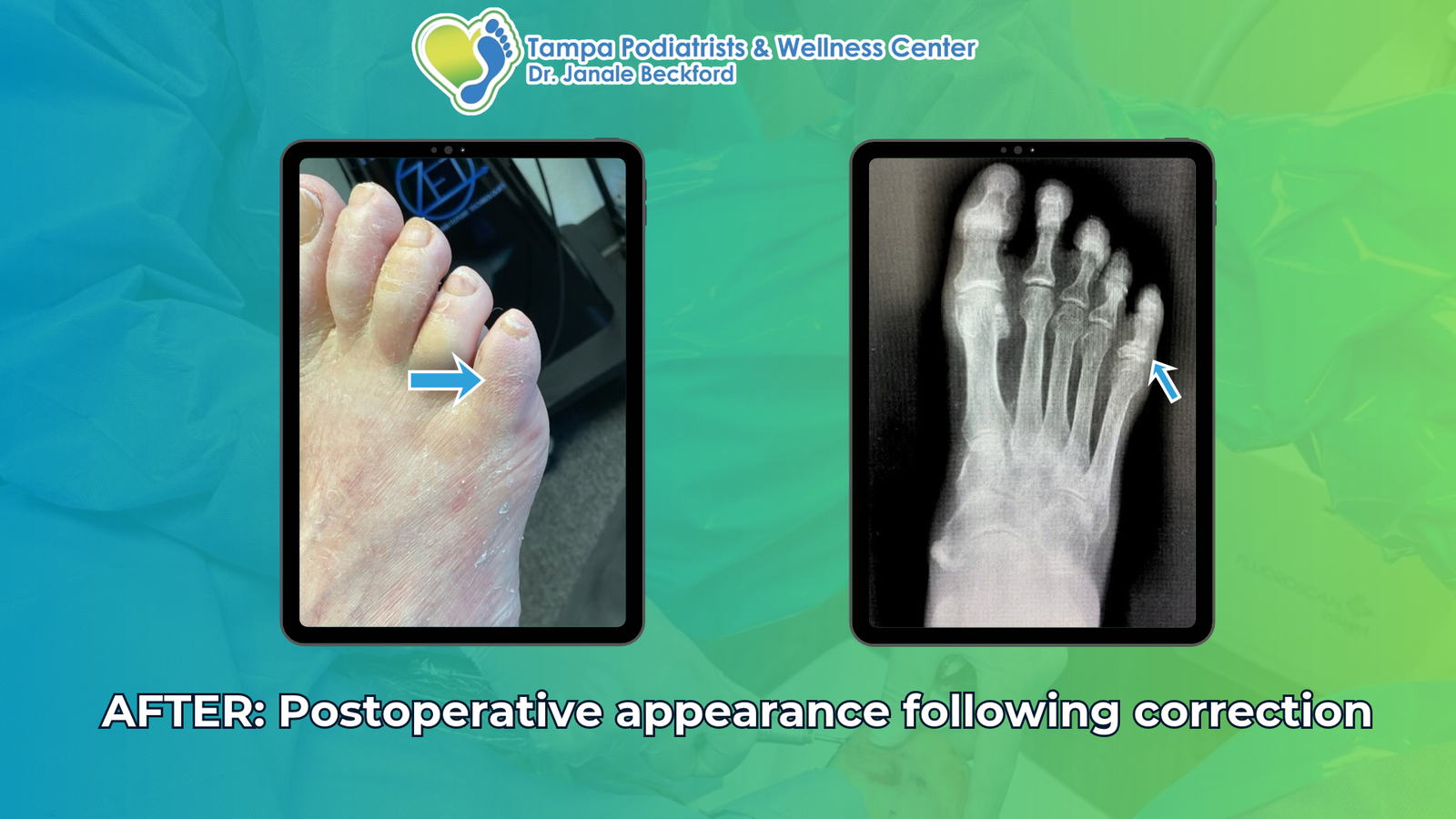
She underwent a right fifth-toe exostectomy and hammertoe correction to address the underlying bony prominence and deformity contributing to the painful corn.
When appropriate, I use minimally invasive techniques to correct certain toe and forefoot deformities through very small incisions. Rather than simply removing the painful skin, the goal is to correct the underlying mechanical problem creating the pressure.
In Karen’s case, the objective wasn’t simply to remove the corn. The goal was to address the mechanical pressure contributing to why the corn kept developing in the first place.
What Did Recovery Actually Look Like?
Recovery is a process, and we believe patients deserve a realistic picture of what that can look like.
Karen’s postoperative progress was monitored with regular examinations and X-rays. Early follow-up showed good toe alignment, minimal swelling and no significant complications.
Over the following weeks, she gradually progressed from a surgical shoe into supportive sneakers. She performed gentle toe range-of-motion exercises and used toe strapping and alignment devices as part of her recovery.
Her recovery wasn’t completely without challenges.
She experienced a brief neuropathic flare and developed a small friction blister. Both were addressed during follow-up and did not interfere with her overall healing.
That detail matters.
Good recovery doesn’t necessarily mean that every day is perfect. It means we continue to evaluate, adjust and guide the patient as healing progresses.
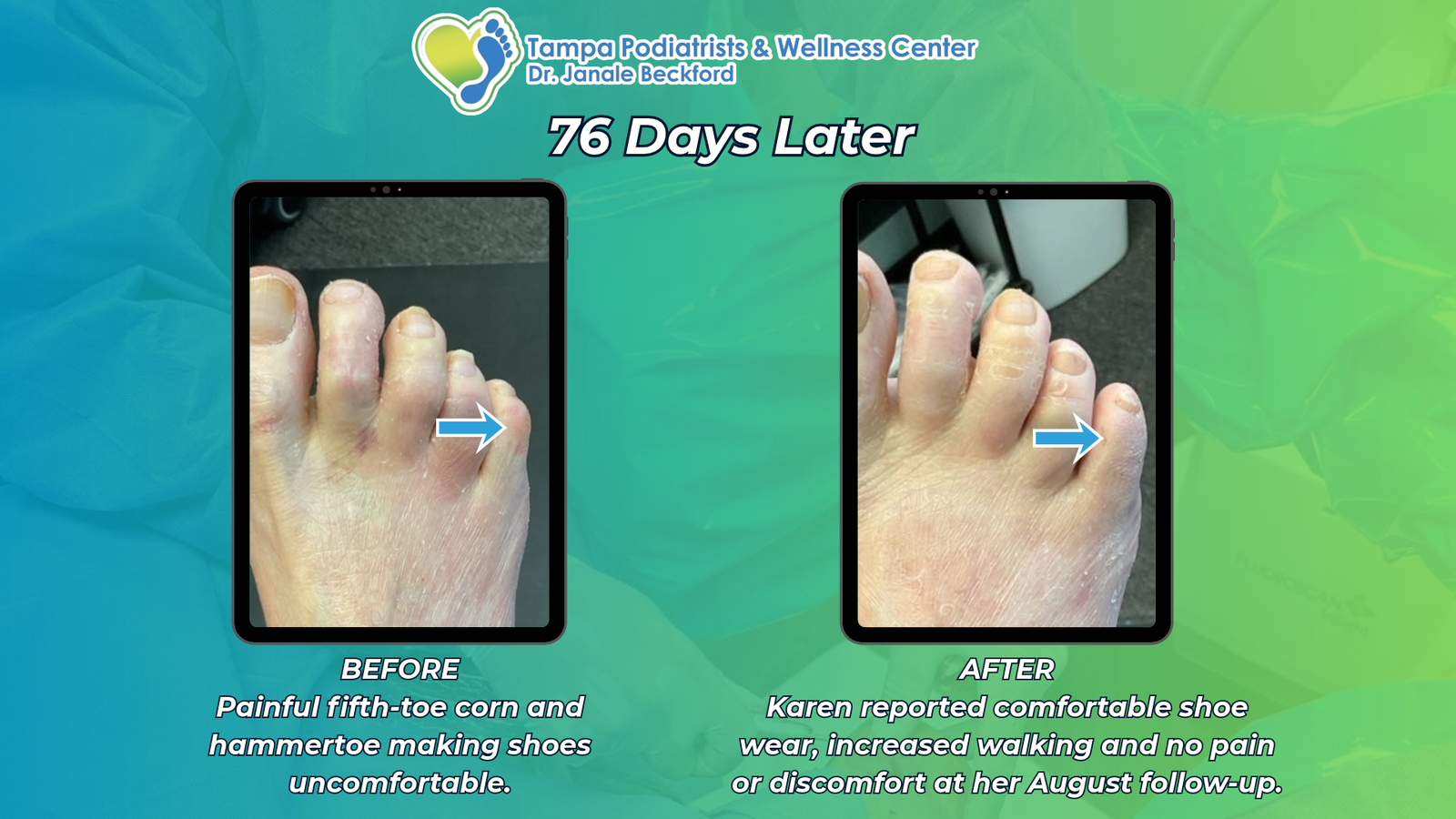
By late July, Karen told us her foot was “feeling great.” She was able to wear her shoes and increase her walking without pain or discomfort.
At her August follow-up—approximately 76 days after surgery—she continued to report no pain or discomfort. She was tolerating her shoes well, walking more comfortably and continuing her home exercises.
Her postoperative imaging also showed that the correction was being maintained.
The Bigger Lesson: Sometimes the Skin is Telling You Something
If you have a corn that keeps returning, don’t automatically assume you simply need another corn pad.
The location of the corn, the position of the toe, your footwear and the underlying structure of your foot can all play a role in repeated pressure.
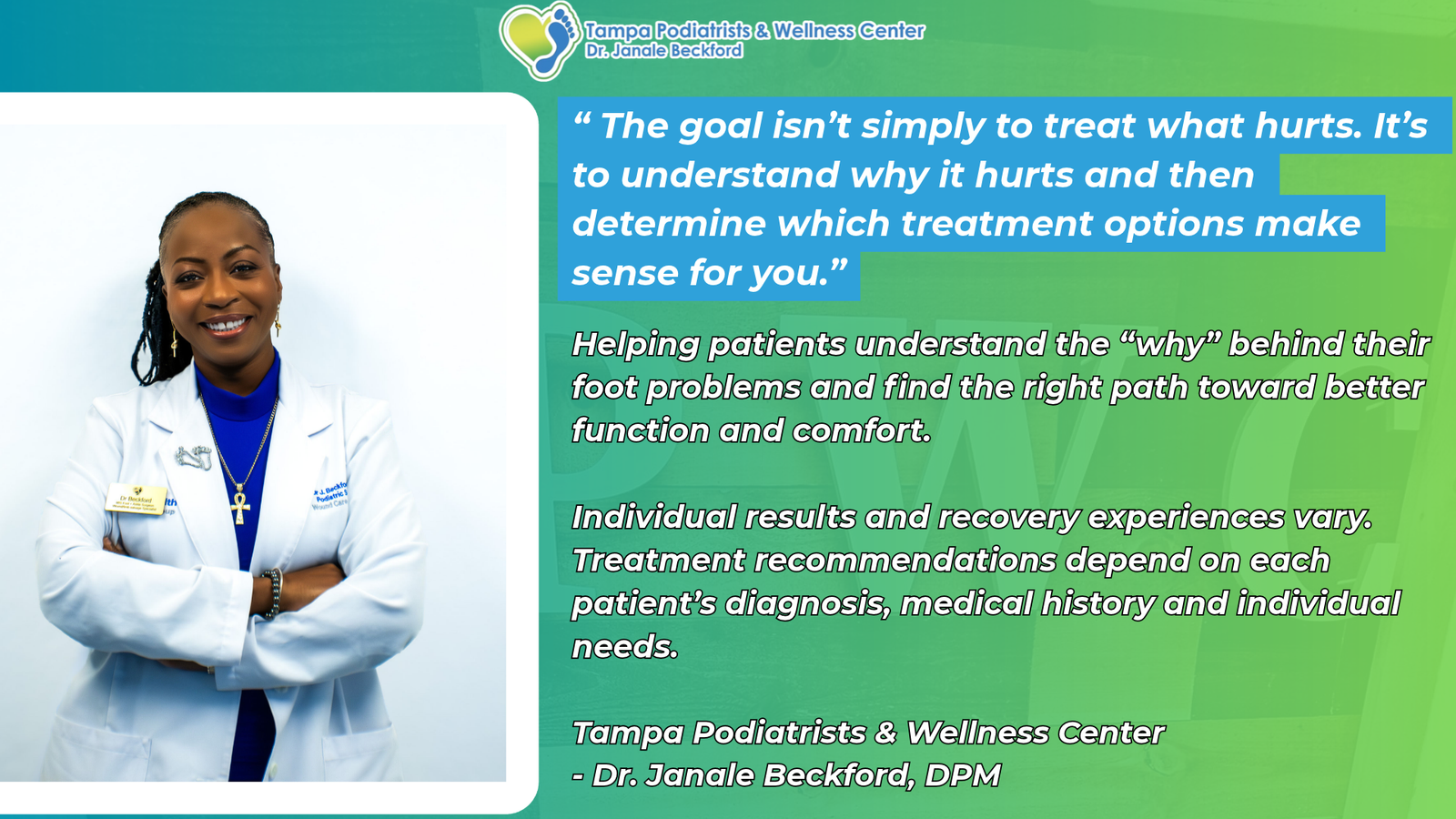
That’s why our approach isn’t simply: “What hurts?”
We also want to know: “Why does it hurt?
Because treating the painful area and understanding why the problem keeps happening are two different things.
Have a Painful Corn That Keeps Coming Back?
If you’ve repeatedly treated the same corn but it continues to return, a comprehensive foot evaluation may help identify what is creating the pressure.
The answer may be something simple.
It may respond to changes in footwear, padding or other conservative treatment.Or there may be an underlying structural problem that deserves a closer look.