Why Does a Foot Wound Keep Coming Back? A Recurrent Ulcer and Osteomyelitis Patient Story
Why Did This Foot Wound Keep Coming Back?
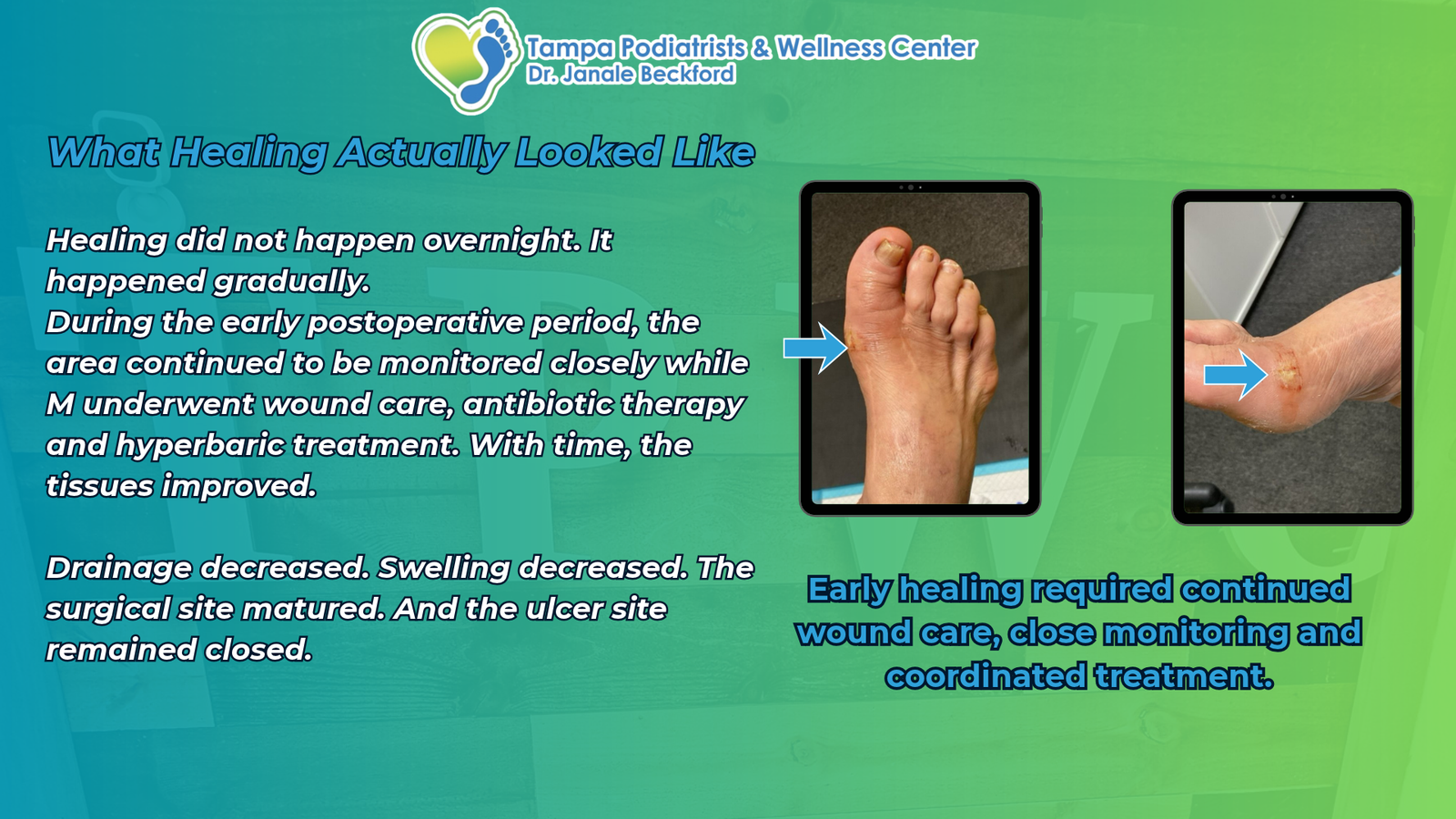
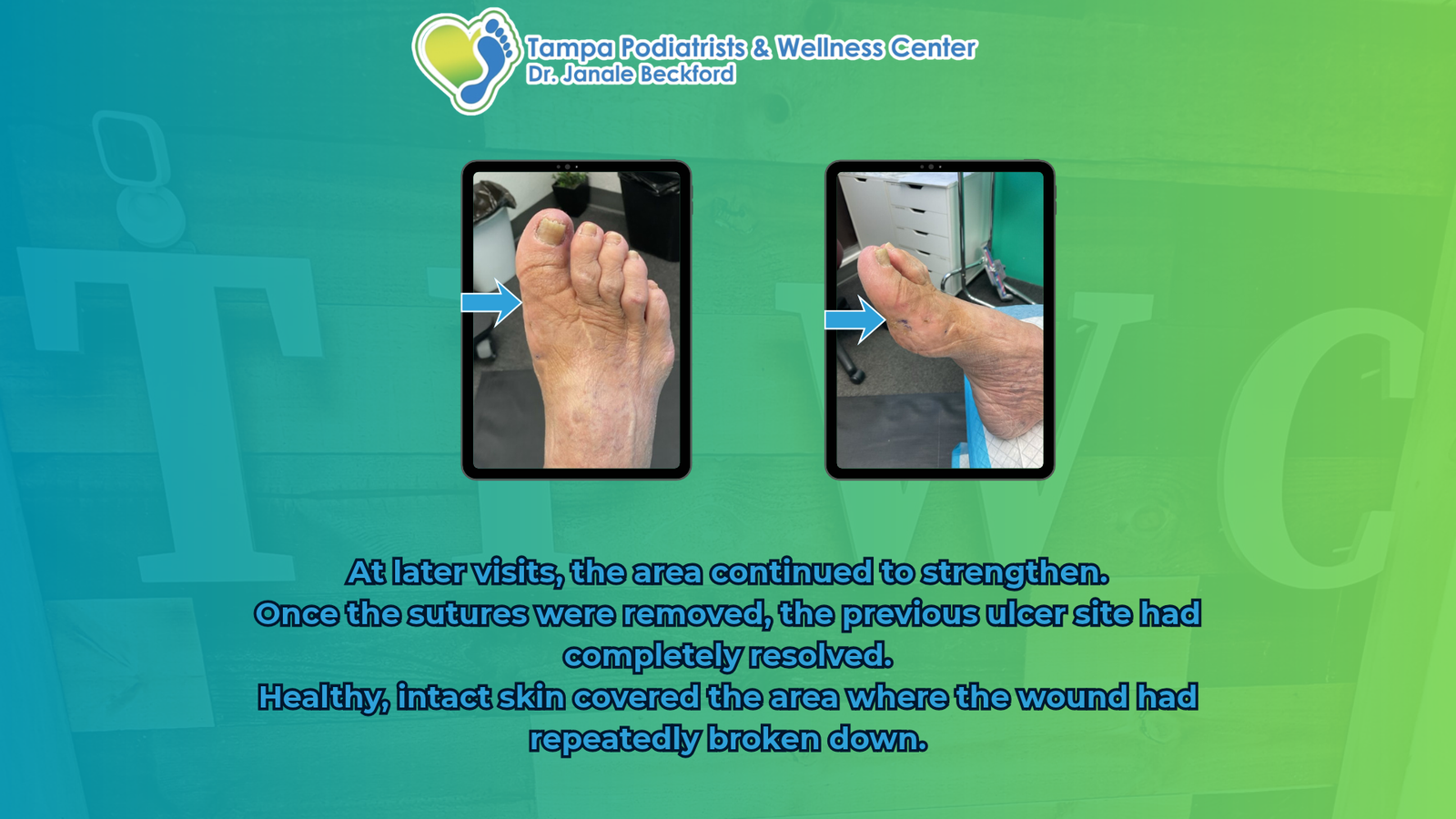
By the time Patient M came to see us, she had been dealing with a recurring wound near her right great toe for several months. She had been receiving care through a local wound care center and had also undergone intravenous antibiotic treatment for confirmed osteomyelitis, an infection involving the bone.
At different points, the wound became extremely small. It nearly closed more than once. Eventually, it did close. However, within less than a month, it opened again.
Her wound care team recognized that something else might be contributing to the repeated breakdown and referred her for a podiatric evaluation. That referral changed the direction of her care.
The Wound Was Small. The Problem Wasn’t.
When we evaluated M, the wound itself was quite small. However, the size of the wound did not match the complexity of her history. Several things immediately stood out:
- The wound had repeatedly improved and reopened
- It was located very close to bone
- Osteomyelitis had been confirmed
- She had undergone wound care and intravenous antibiotic therapy
- Despite treatment, the area had not remained healed
That raised an important question: “Why wouldn’t this wound stay closed?”
Looking Beneath the Surface
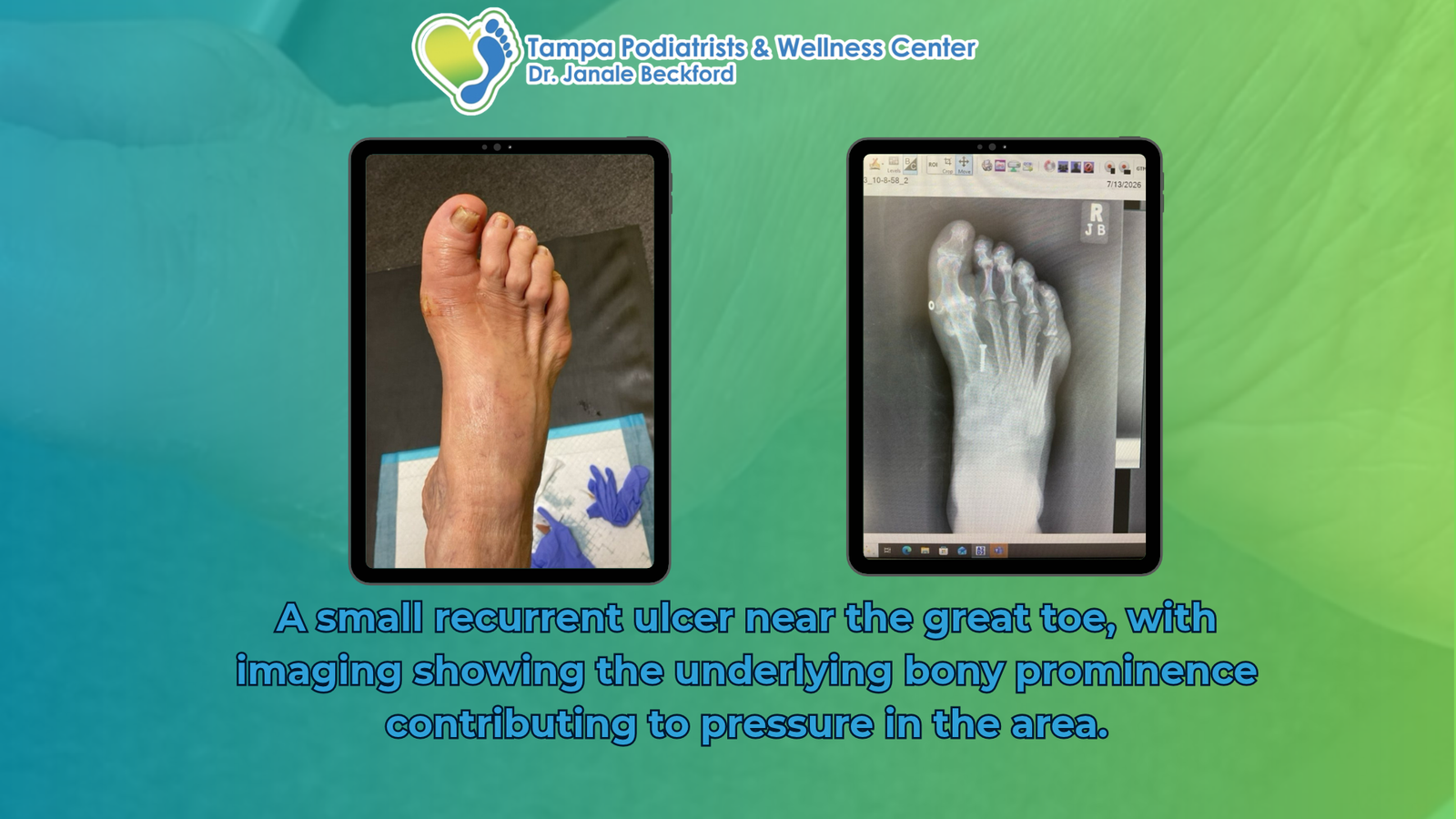
- Standing X-rays were obtained in our office
- The imaging revealed an important part of the problem: a bony prominence beneath the area where the ulcer continued to develop
- M had undergone a Lapidus bunion procedure many years earlier with another surgeon. That surgery had permanently changed the position and mechanics of her first ray
- Over time, the way her foot loaded during walking, together with footwear pressure and the underlying bony prominence, appeared to be creating repeated stress in the same area
- The problem had developed into a cycle:
- Abnormal pressure → skin breakdown → ulceration → infection → bone involvement → healing → repeated pressure → breakdown again.
- The wound was what we could see
- But the reason it would not stay closed was deeper
When Another Dressing Wasn’t the Answer
We discussed treatment options with M. As there was an underlying structural source of pressure beneath a recurrent ulcer, along with the history of osteomyelitis, continuing to treat only the surface of the wound would not address the entire problem.
Surgical treatment was recommended.
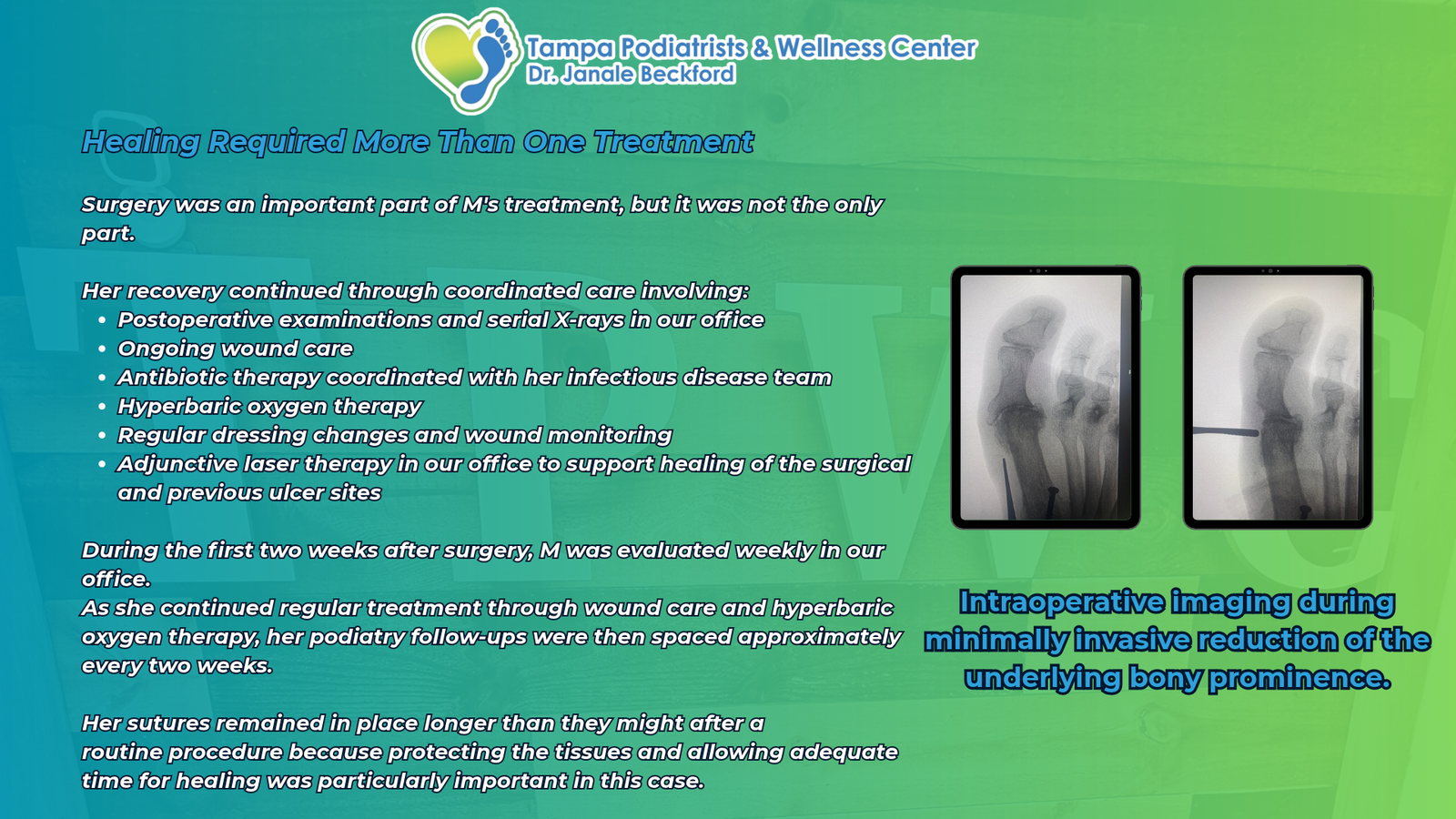
M underwent minimally invasive surgery to reduce the bony prominence along the medial side of the great toe.
- Reducing the prominence created more space between the underlying bone and the soft tissue overlying the ulcer site, helping to reduce the pressure that had repeatedly contributed to skin breakdown
- As the ulcer was small but recurrent, it was also completely excised during surgery and sent for pathology and culture
- This allowed the treatment team to obtain more specific information about the organisms present and better guide the antibiotic treatment she would receive during the following weeks
Closing the Wound Wasn’t the Final Goal
Once the skin had healed, the next question became:
How do we help keep it closed?
- The mechanics of M’s foot had been altered by the Lapidus bunion procedure she underwent years earlier
- Our surgery addressed the immediate bony prominence, but we did not attempt to reconstruct or change the position created by that original procedure
- Instead, after the wound healed, M was casted for custom foot orthotics
The purpose of the orthotics is to support her existing foot mechanics, improve pressure distribution and place the foot in the best functional position possible during walking. Her long-term plan also included:
- Supportive footwear
- Avoiding barefoot walking
- Appropriate foot and ankle exercises
- Continued monitoring of the skin
- Attention to any new areas of pressure or callus
Closing a wound is an important milestone. However, protecting the area from another breakdown is just as important.
The Goal Was Bigger Than Healing Skin
- M is a healthy, active and independent older adult
- She wanted to continue walking comfortably, wearing regular shoes, remaining independent and participating fully in her family life
- That became part of our goal as well
- Successful wound care is not simply about getting skin to close
- It is about understanding why the skin broke down, addressing the factors contributing to the problem and helping the patient return to the life they want to live
The Bigger Lesson: Ask Why the Wound Won’t Stay Closed
A wound that repeatedly reopens deserves another look. Sometimes infection is part of the problem. Sometimes pressure or an underlying bony prominence contributes. Sometimes altered foot mechanics continue placing stress on the same area. And sometimes several of these factors are present at the same time.
That is why complex wound care often requires looking beyond what is visible on the surface.When a wound keeps returning, we need to ask what is happening underneath.
Is a Foot Wound Not Healing — or Does It Keep Coming Back?
If a foot wound repeatedly opens, continues to drain or seems to improve only to break down again, a comprehensive evaluation may help identify factors contributing to the problem.
At Tampa Podiatrists & Wellness Center, Dr. Janale Beckford, DPM, evaluates persistent and recurring foot wounds with the goal of identifying both the wound itself and the factors that may be preventing lasting healing.